
Our Latest News


Keir Starmer'S Political Balancing Act: Can He Survive The Scandals?
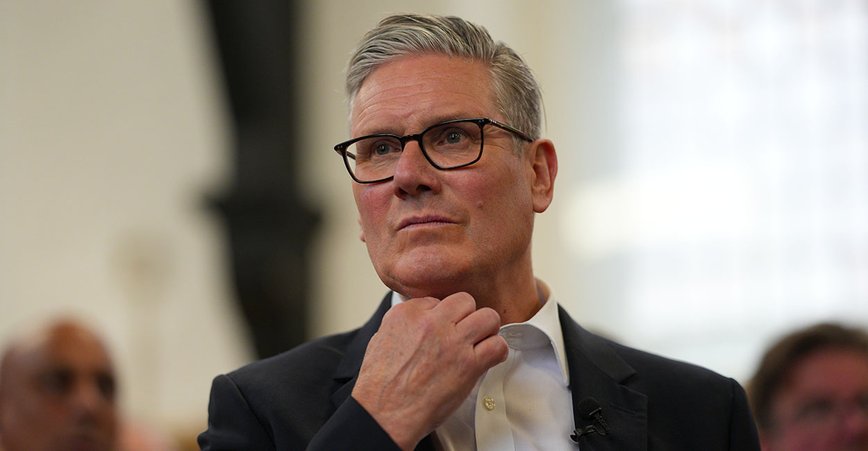
Keir Starmer's Political Predicament
British Prime Minister Keir Starmer is navigating stormy waters, juggling electoral setbacks and a cascade of scandals that threaten his leadership. With his Labour Party taking a significant hit by losing 1,496 seats in recent regional elections, Starmer's political future is under siege. While his party struggles, Reform UK, a new populist conservative force, is on the rise, gaining 1,451 seats and shaking up the British political landscape.
“Keir Starmer is governing like a man who knows his mandate is evaporating,” Paul McCarthy, senior research fellow in European affairs at The Heritage Foundation, told The Daily Signal.
Adding fuel to the fire, Health Secretary Wes Streeting has resigned, and Labour MP Catherine West is openly challenging Starmer's Cabinet, hinting at a leadership contest. Starmer's leadership is being questioned not just from political opponents but within his own ranks.
Scandals Compounding the Crisis
Starmer's troubles don't end with election defeats. He's under fire for ousting Olly Robbins in April over inadequate vetting of Lord Peter Mandelson, who faced scrutiny due to connections with the disgraced Jeffrey Epstein. Additionally, Starmer's decision to shelve the sale of the Chagos Islands Archipelago to Mauritius has sparked controversy, with critics arguing it jeopardizes the strategic U.S.-U.K. base at Diego Garcia.
Further complicating matters, Labour Together, a key player in Starmer's 2024 victory, is mired in scandal over secret research into journalists, raising red flags about political targeting. The group, now rebranding, is stepping back from endorsements, leaving Starmer without a critical ally if leadership challenges arise.
Starmer's Response and Future
Starmer's retort to Conservative leader Kemi Badenoch after recent election results highlighted his defiance. "We do have one thing in common: both our parties had tough results in the local elections last week," he remarked, adding a jab at the Conservatives' diminishing role as the official opposition.
Critics argue Starmer is doubling down on failed strategies. McCarthy warns that instead of adjusting course, Starmer is entrenching himself further, displaying political survival instincts over democratic leadership. This, he suggests, is a dangerous path that risks alienating voters and threatens the free press.
As Reform UK gains momentum, McCarthy contemplates its potential as a credible governing force. Voters, he contends, are increasingly opting for a government committed to sovereignty, accountability, and freedom. Britain's political tectonics are shifting, and Starmer's Labour Party may be on the brink of losing its grip.
The rise of Reform UK signals a pivotal moment in British politics, offering voters a fresh alternative rooted in common sense and transparency. As Starmer faces internal and external challenges, the pressure mounts. Can he weather the storm, or will this be a turning point towards a new political era in Britain?

Author: Mia